
✦ Islamic Wisdom Series ✦
The Wisdom of Patience (Sabr)
A Comprehensive Islamic Guide to Endurance, Gratitude & Divine Trust
By Islamic Wisdoms Team
·
September 25, 2026
· 8 min read
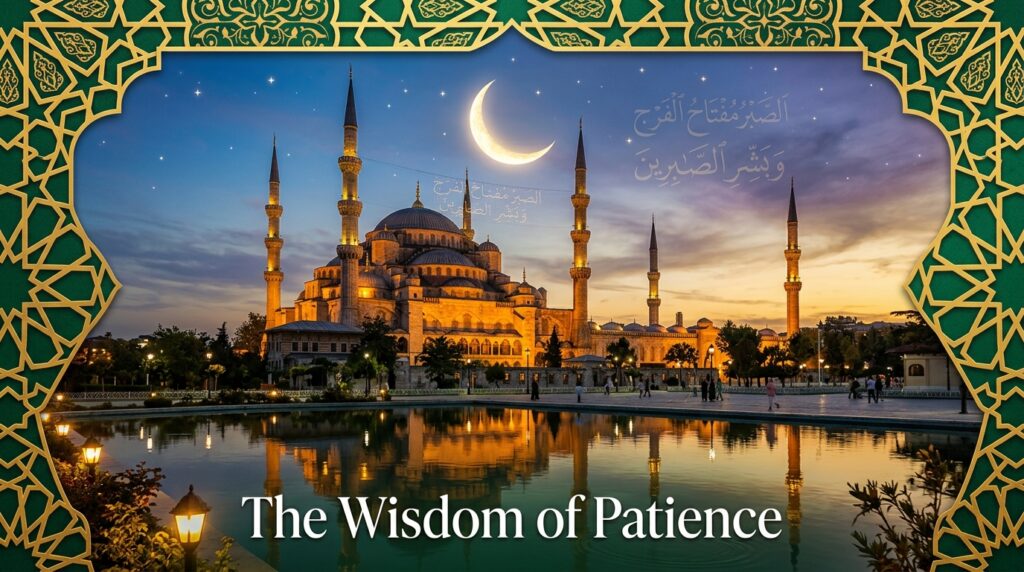
الصَّبْرُ مِفْتَاحُ الْفَرَجِ
"Patience is the key to relief." — A Hadith of the Prophet ﷺ
What is Sabr (Patience)?
In Islam, Sabr (صبر) is far more than merely enduring hardship with a stoic face. It is a profound spiritual virtue — a dynamic state of the soul that encompasses restraint, perseverance, gratitude, and unwavering trust in Allah's wisdom. The Prophet Muhammad ﷺ described it beautifully: "How remarkable is the case of the believer! There is good for him in everything, and this is only for the believer. If he experiences something pleasant, he is thankful to Allah and that is good for him; and if he comes across some adversity, he is patient and that is good for him too." (Sahih Muslim) This hadith reveals the extraordinary gift that Sabr offers: no matter what life brings — joy or sorrow, ease or hardship — the believer finds goodness in it. Patience transforms every experience into an act of worship.
☽
Allah mentions Sabr in the Quran over 90 times — making it one of the most emphasized virtues in the entire Book of Allah. It is the cornerstone of a believer's character and the foundation of spiritual strength.
The Three Dimensions of Sabr
Islamic scholars, most notably Imam Ibn al-Qayyim al-Jawziyyah, identified three distinct types of patience that a Muslim must cultivate to achieve spiritual wholeness and closeness to Allah:
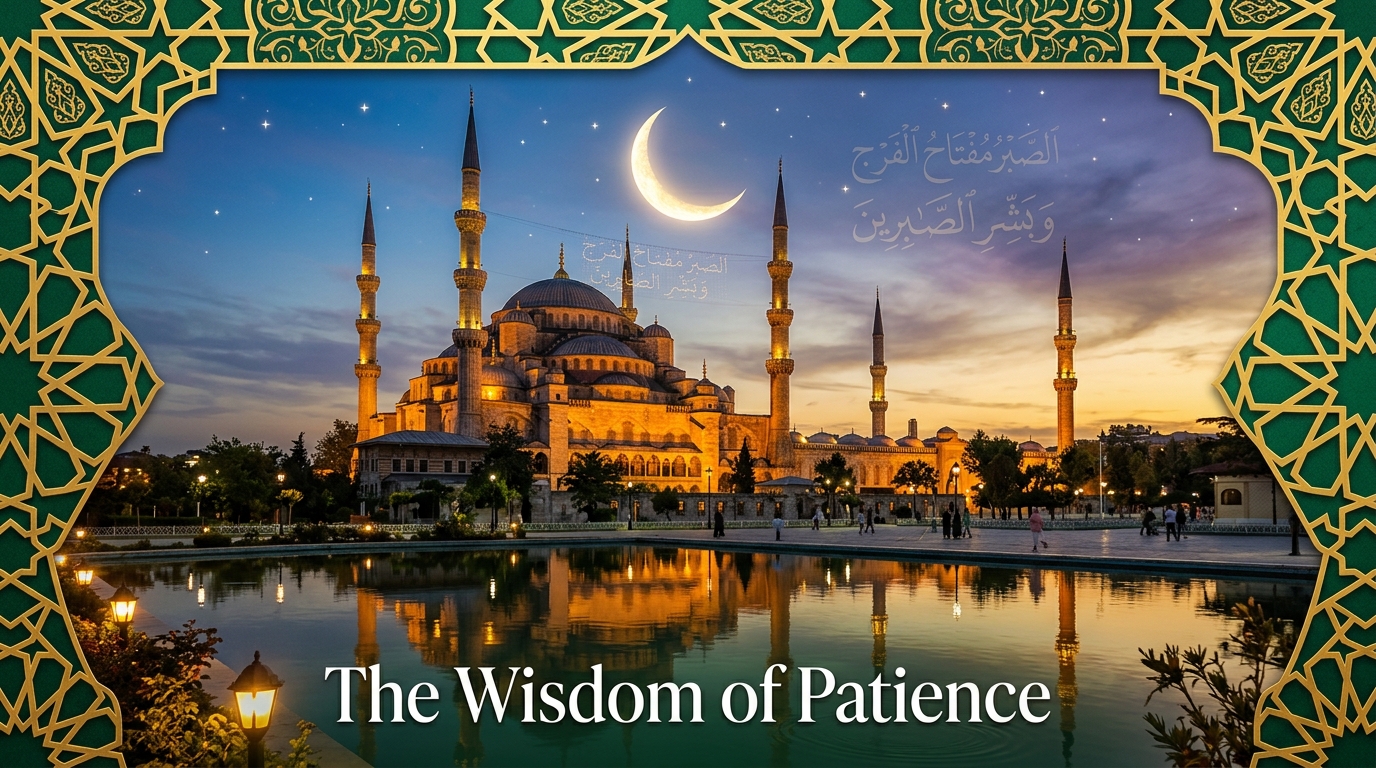
📸 The illuminated mosque at twilight — a timeless symbol of peace, patience & surrender to Allah
Quranic Insights on Patience
The Quran speaks about Sabr with remarkable depth and frequency. Allah ﷻ declares His direct love for those who exercise patience — a distinction shared by very few other virtues. Let us reflect on one of the most powerful ayahs on this topic:
01
Sabr 'ala Al-Ta'ah
Patience in performing acts of worship and obedience. Maintaining consistent Salah, fasting, charity, and dhikr requires patience — especially when life is busy or the nafs (ego) resists.
02
Sabr 'an Al-Ma'asi
Patience in refraining from what Allah has prohibited. This is the patience of self-restraint — resisting temptations, controlling anger, avoiding the forbidden, and guarding the tongue.
03
Sabr 'ala Al-Maqa'dir
Patience upon the decrees of Allah. When trials, loss, illness, or hardship strike, the believer accepts Allah's qadar (divine decree) without complaint, trusting that Allah's plan is perfect.
Practical Steps to Cultivate Sabr
Notice the word Allah uses: "Bashir" — give glad tidings! This is not a promise of mere consolation, but a divine announcement of profound reward. Allah is telling us that patience in the face of trials is not a burden — it is a pathway to the most beautiful of outcomes.
وَلَنَبْلُوَنَّكُم بِشَيْءٍ مِّنَ الْخَوْفِ وَالْجُوعِ وَنَقْصٍ مِّنَ الْأَمْوَالِ وَالْأَنفُسِ وَالثَّمَرَاتِ ۗ وَبَشِّرِ الصَّابِرِينَ
"And We will surely test you with something of fear and hunger and a loss of wealth, lives, and fruits — but give good tidings to the patient." — Surah Al-Baqarah (2:155)
— القرآن الكريم | Surah Al-Baqarah 2:155
Sabr is not passive resignation — it is an active, conscious spiritual discipline. Here are practical ways to strengthen your patience according to Islamic teachings: 1. Remember Allah's Promises: Reflect daily on the Quranic assurance that with every hardship comes ease (Surah Ash-Sharh 94:6). Write these verses where you can see them. 2. Practice Istirja': When trials strike, say "Inna lillahi wa inna ilayhi raji'un" — "Indeed, we belong to Allah and to Him we shall return." This dhikr immediately reframes hardship. 3. Make Du'a for Sabr: The Prophet ﷺ taught us: "Whoever remains patient, Allah will make him patient. Nobody can be given a blessing better and greater than patience." (Bukhari). Ask Allah directly to grant you Sabr. 4. Study Stories of the Prophets: Prophet Ayyub (Job) ﷺ endured immense suffering with unshakeable patience. Prophet Yusuf (Joseph) ﷺ faced betrayal, imprisonment, and separation — yet never lost his Sabr or his trust in Allah. 5. Gratitude (Shukr) alongside Patience: Sabr and Shukr are two wings of the same bird. Gratitude in ease, patience in hardship — together they elevate the believer to the highest spiritual stations.
Conclusion: Sabr as a Way of Life
True Sabr is not about suppressing emotions or pretending life's difficulties don't exist. It is about surrendering the outcome to Allah while continuing to strive with full effort and sincerity. It is the believer's secret weapon — the quality that transforms suffering into wisdom, trials into blessings, and ordinary moments into extraordinary worship. As Imam Ali ibn Abi Talib ؓ beautifully said: "Know that patience, if used at the right moment, is like a noble warrior. How many a difficulty has been overcome by patience." May Allah grant us all the strength of Sabr, the light of Shukr, and the peace of complete Tawakkul. Ameen. 🤲
Deepen Your Islamic Knowledge
Explore more articles on Islamic wisdom, Quranic reflections, and spiritual growth. Every week, new insights from the treasures of Islamic scholarship.
Explore More Articles